
How Families Stay Involved After a Move to Residential Care
Moving a loved one into residential care can bring many emotions. Families may feel relieved that daily support is available, while also wondering how their relationship will change.
Some adult children worry that choosing residential care means stepping away from their role. Others fear they will no longer be included in everyday decisions or that their loved one may feel forgotten.
In reality, family involvement does not end after a move. It simply begins to look different.
Residential care can take over many of the daily responsibilities that have become difficult to manage, while family members continue providing something equally important: familiarity, connection, encouragement, and love.
Stay Connected in Ways That Feel Natural
Family involvement does not have to follow one strict schedule. Some families visit regularly, while others stay connected through phone calls, video chats, photographs, cards, or shared updates.
The most meaningful contact is often the kind that feels familiar.
A short call about a grandchild’s school activity, a visit with a favorite snack, or a conversation about family news can help an older adult continue feeling included in the life they have always known.
Families who live farther away can still remain present. Consistent calls, mailed photos, recorded messages, and planned video conversations can offer reassurance and maintain a sense of closeness.
What matters most is not the length of every interaction. It is the feeling that the relationship continues.
Share What You Know About Your Loved One
Families hold valuable knowledge that can help a residential care home understand the person behind the care needs.
You may know which foods your loved one prefers, what time they like to wake up, which television programs they enjoy, or what helps them feel calm when they are having a difficult day.
You may also know the stories, traditions, and routines that are important to them.
Sharing these details can help caregivers create a more familiar and personalized experience. It allows daily support to feel less like a fixed system and more like care shaped around an individual person.
Even small details can make a difference. A favorite song, a preferred cup, a familiar blanket, or a usual morning routine can help a new place begin to feel more like home.
Keep Communication Open
Families should feel comfortable asking questions and sharing concerns after a move.
It can be helpful to understand how updates are provided, who to contact, and how changes in routines or preferences are communicated. Clear communication can reduce uncertainty and help families feel more confident about their loved one’s daily experience.
At the same time, families can provide helpful updates of their own. Changes in family circumstances, personal preferences, or important events may affect how an older adult is feeling.
Communication works best when it is respectful and collaborative. Families and care providers share the same goal: helping the older adult feel safe, comfortable, and valued.
Make Visits About Connection, Not Only Care
Before residential care, family visits may have become focused on tasks.
You may have spent your time preparing meals, organizing medications, cleaning, running errands, or checking whether everything was safe. Conversations may have happened in between responsibilities.
After a move, visits can become more personal again.
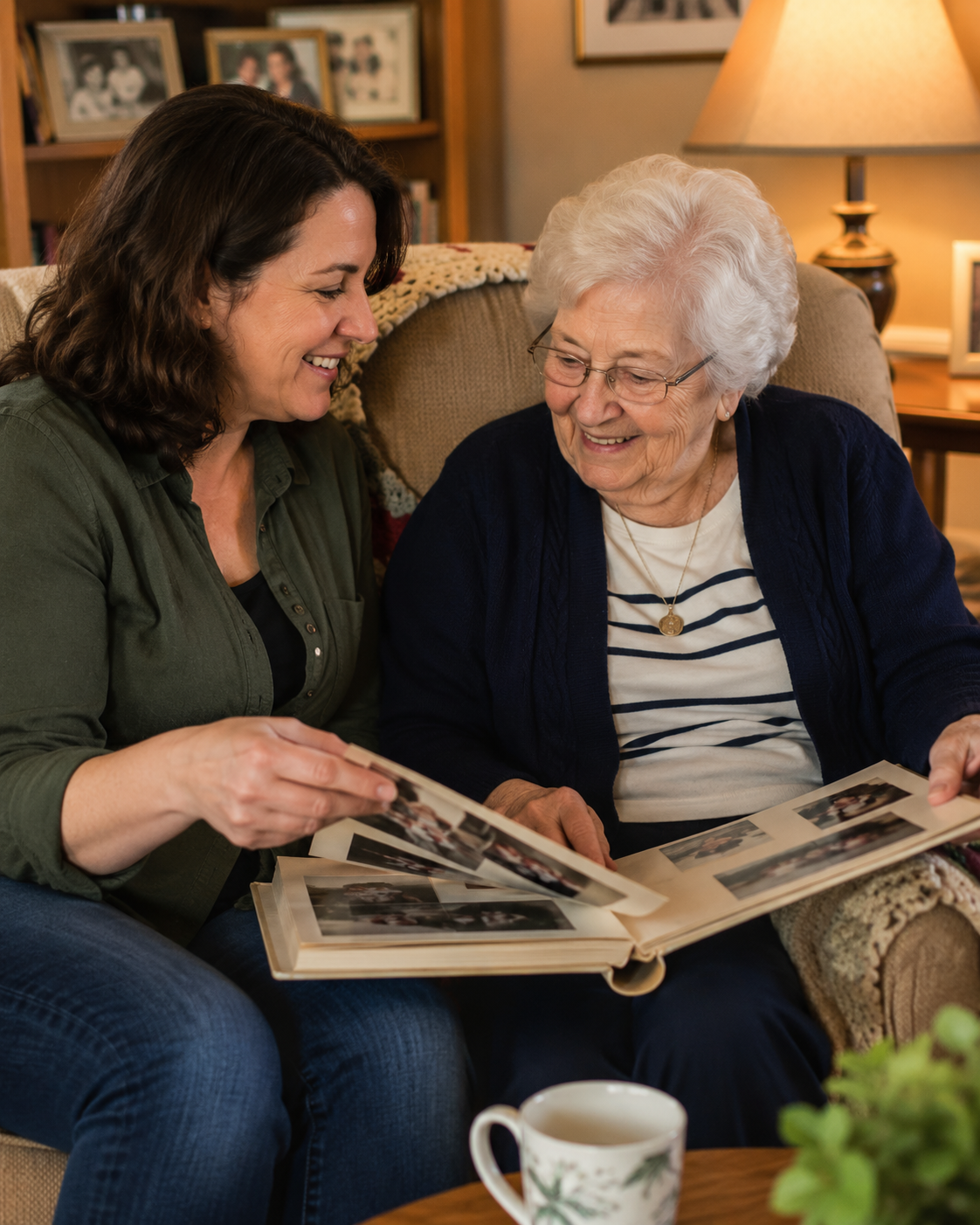
You may have more time to sit together, look through old photographs, share a meal, listen to music, or simply talk. Instead of managing every detail, you can focus more fully on being a daughter, son, spouse, sibling, or friend.
This shift can feel unfamiliar at first, but it can also bring relief. It gives families the opportunity to reconnect without every visit revolving around a list of things that need to be done.
Continue Including Your Loved One in Family Life
Moving into residential care does not mean someone should be left out of birthdays, holidays, family decisions, or everyday updates.
Invite your loved one to participate whenever it is comfortable and practical. Bring family gatherings to them when needed. Share photos afterward if they cannot attend. Ask for their opinions and continue including them in conversations that matter.
Maintaining these connections supports dignity and belonging.
An older adult’s address may change, but their place in the family does not.
A New Kind of Partnership
Residential care can create a partnership between the family and the people providing daily support.
The care home helps with consistency, routine, companionship, supervision, and everyday needs. The family continues bringing history, identity, emotional connection, and a sense of belonging.
Families do not become less important after a move. Their role becomes different—but it remains deeply meaningful.
At Senior Family Home, we believe residential care should support both older adults and the people who love them. A warm, home-like setting can provide dependable daily care while helping families remain connected, informed, and involved.
Address
3148 W Rome Ave
Anaheim, CA 92804
hello@seniorfamhome.com

phone
(714) 600-6195